Marine fasteners: A2, A4 or duplex?
By the sea, in a cannery or in a desalination plant, corrosion hits the joints first. How to choose fastener grades and fittings that last.
On coastal sites, fish-processing plants and desalination plants, the trouble does not always come from the big equipment. Often it comes from the joints: bolts that rust and seize, a flange gasket that leaks, a fitting that corrodes. Choosing these “small” parts well avoids repeated and costly interventions.
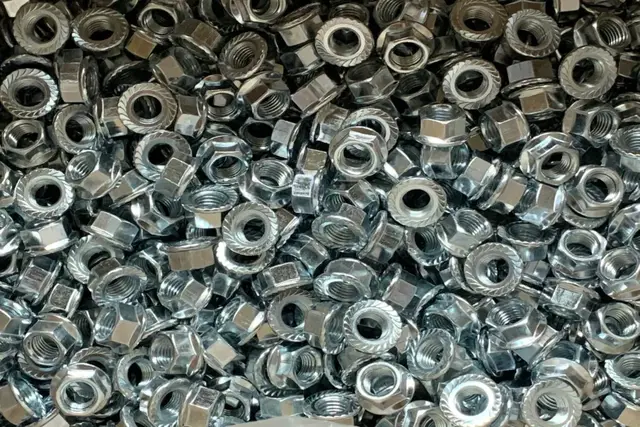
Stainless fasteners: understanding A2 and A4
Stainless fasteners carry a letter and a number, for example A4-80:
- the letter and first digit give the steel family: A2 corresponds to a 304-type stainless, A4 to a 316-type stainless, which contains molybdenum;
- the number after the dash gives the property class: 70 or 80 (tensile strength of 700 or 800 MPa).
The molybdenum in A4 gives it much better resistance to chlorides. In marine environments, in contact with seawater or spray, A4 is generally recommended; A2 is kept for dry or mildly aggressive indoor environments.
When to go beyond A4?
For fasteners permanently immersed in seawater or brine, or exposed to high temperatures, A4 can pit too. More resistant grades such as duplex or super duplex are then used, consistent with the material of the flanges and the equipment being joined.
Watch out for galvanic corrosion
When two different metals touch in an electrolyte such as seawater, the less noble one corrodes faster. A zinc-plated steel bolt on a stainless flange, or a carbon steel flange clamped with stainless bolts in a wet environment, are risky situations. The rule: materials of equivalent grade, or electrical insulation between them (insulating washers and sleeves).
Galling, the enemy of dismantling
Stainless-on-stainless joints tend to gall when tightened, especially in large sizes. A suitable anti-seize compound and controlled tightening make future maintenance much easier.
HDPE electrofusion fittings: the corrosion-free alternative
For low-pressure seawater, raw water or discharge networks, high-density polyethylene (PE100) simply removes the corrosion problem. Electrofusion fittings (couplers, elbows, tees, reducers) contain a built-in heating wire that fuses fitting and pipe together during welding.
Two pieces of information are essential to order:
- the pipe’s outside diameter in millimetres;
- the SDR (diameter / wall thickness ratio), for example SDR 11 or SDR 17, which sets the allowable pressure.
Summary
| Situation | Usual choice |
|---|---|
| Dry, mildly aggressive indoor area | A2 fasteners |
| Marine atmosphere, spray, cannery | A4 fasteners (A4-70 or A4-80) |
| Permanent immersion in seawater / brine | Duplex or super duplex, depending on flanges |
| Low-pressure seawater network | PE100 HDPE pipe and fittings |
For a complete list of fasteners, gaskets and fittings, the most efficient approach is to send a table (Excel or PDF) with sizes and grades: it can be quoted in a single offer.
Need a part or a technical opinion? Send us your reference, a nameplate photo or your parts list through our quote request form or on WhatsApp at +212 674 631 270: we reply within 48 working hours.
Need this part? Request a quote
Send your parts list or a nameplate photo: we come back to you within 48 working hours with a priced offer.